October 2026
The Funnel of Doom.
By Ellis Taylor, Founder of Kind
Every company on planet earth wants fewer, better people. Sharper minds, not more headcount.
So the way they go about hiring those people must have gotten sharper too, right?
There are more ‘silver-bullet’ recruitment tools than ever and “AI has ‘democratised hiring’.”
Though recruitment efficiency is undeniably spiraling. And sorry ‘Job Ads’ but you’re my fall guy here.
Job Ads are the antithesis of effective hiring.
They are a distraction. A signal that says "we're OK to chance this hire" and a cheap way to hand your competitors a live read on exactly what you're building next.
The more sophisticated recruitment teams are still not much better off. Most headhunting processes still follow an age-old, low-percentage play, propped up by a LinkedIn Recruiter licence and is now exacerbated with AI-generated messages en-masse that all sound exactly the same.
Think your messages stand out? Ask a candidate to share their DMs with you. Its hilarious.
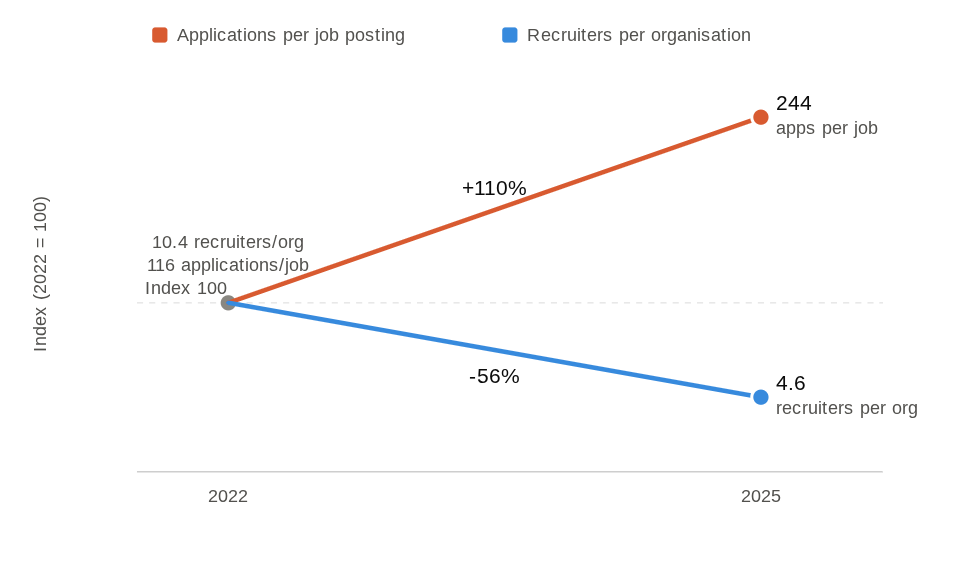
Applications per job ad per recruiter went from 146 to 746. A recruiter today is absorbing more than 5x the volume they were three years ago, with less than half the team - Greenhouse.
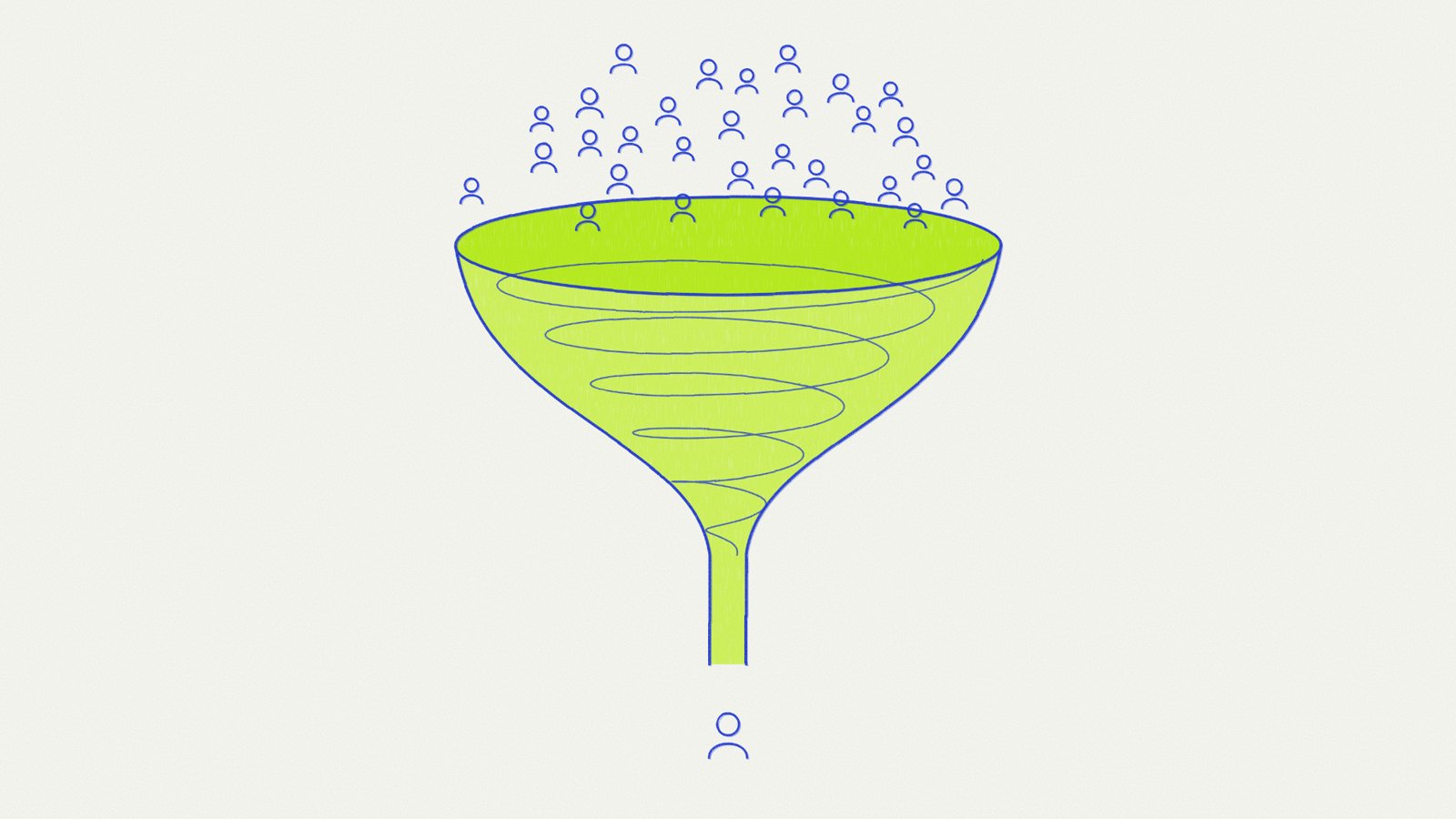
I loved hearing Adam Ward, Head of Talent at Cursor, describe this on a recent Lenny podcast. He calls it the "Funnel of Doom."
"Companies think about recruiting like a funnel. I am going to reach out to 100 people. 20% of those are interested. That is not the top 20% — that is just the 20 people you caught having a bad day at work.
So you start with a sub-optimal set.
We then weed people out at each stage and hire the remainder. That may be the best person in that 20%, but it's never really the best person for the job. Over time, that's what makes companies regress to the mean as you add more hires."
And it is so hard to break that regression. Culture, delivery and efficiency all take the hit, and costs blow out as you try to claw the bar back up. It takes a total transformation to reverse it.
Adam again:
"In your mind, there are 50 people in the country who can do this particular job really well. So let's go find them, and then relentlessly pursue them and activate those people, not hope against all the odds that they're the last candidate left standing in your funnel of doom."
That is not an easy task.
It's also exactly what Talent Engineering is built to solve: sourcing the best possible 50 people for a role through deep scoping and investigation, then systematically engaging them with personalised content and genuine connection, long before they're "in market."
At every stage, you offer them value. You listen. You understand what actually motivates them. You build a real relationship, so that when the moment finally comes that they're open to a change, you're already Johnny-on-the-spot.
It sounds daunting. But the alternative is this: post a job ad, or spray a LinkedIn message to 100 people who work at logos you like, and hope that someone exceptional is simultaneously considering a move, actively job-hunting, immune to the hundred other AI-written messages hitting their inbox that week, sitting inside your salary band, and not already being courted by someone else with a very similar message.
How many times in your career have you actively been pursuing a job change?
Over a 20-year career, 6 times? And we bank a 30 day Job Ad or one-off Cold Message to land on that exact moment everyone feels every 3.33 years on average?
Recruitment strategies are still betting the business on the slim chance that the one candidate who could truly change your company happens to walk through all five of those sliding doors at the exact moment you need them.
Compound that with the latest figures… Australia's job mobility rate has fallen to 7.2%, the lowest ever recorded.
Your best candidate is not coming to you.
Someone who speaks their language is going to have to go and find them, with a damn good pitch.
 Book a call